Growth Engines That Endure: When Growth Becomes Infrastructure

Growth Engines That Endure: When Growth Becomes Infrastructure

Growth Engines That Endure: When Growth Becomes Infrastructure

How attribution, velocity, and margin of safety align over time to build growth systems that compound, adapt, and endure without constant intervention.
WRITTEN BY
Jon Kruzeniski

The endpoint of growth is not acceleration.
It is continuity.

Growth becomes infrastructure when it continues to function without constant intervention.

How Compounding Emerges Structurally

Compounding is not an event.
It is the result of alignment over time.

It emerges when:

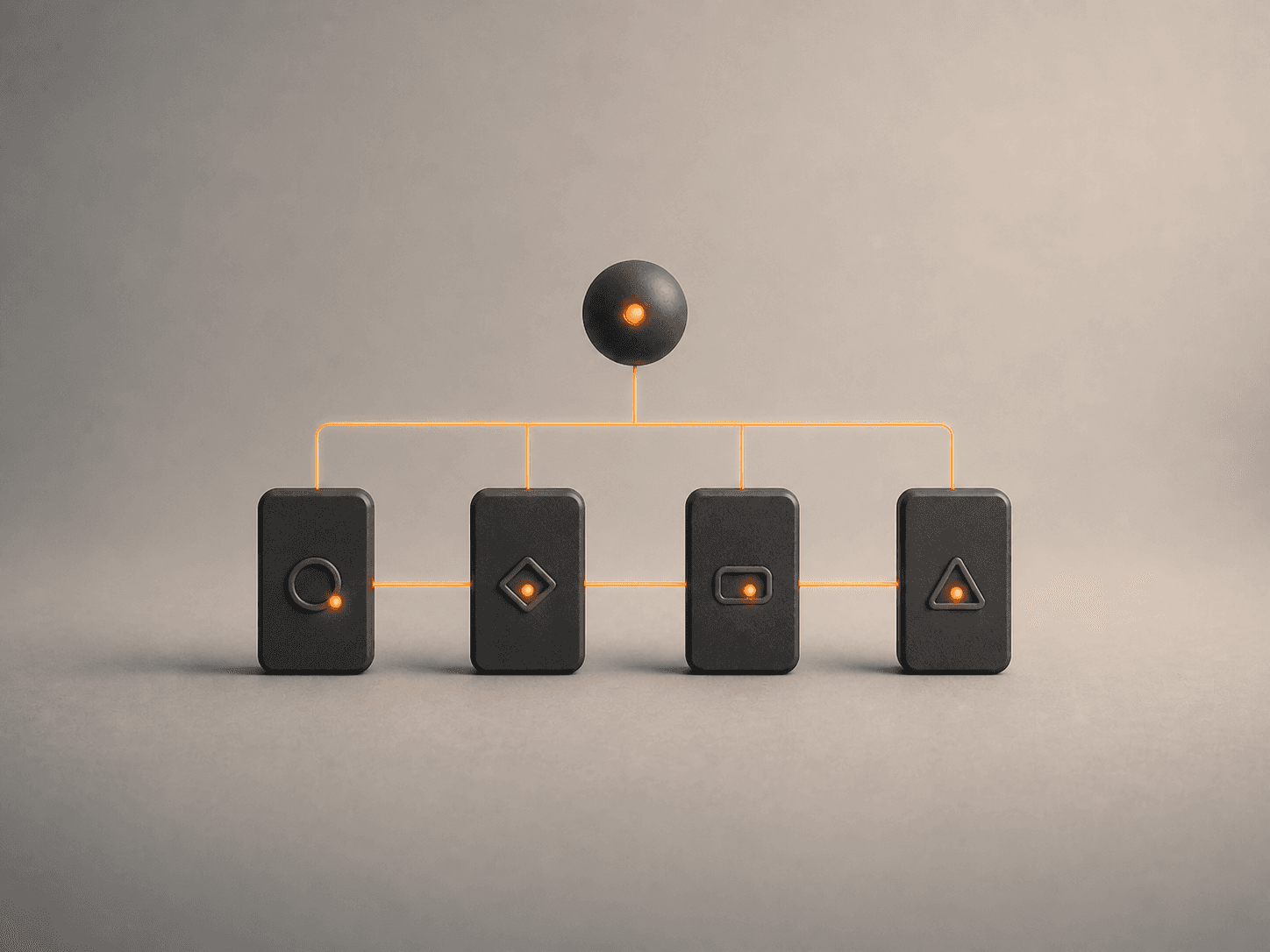
  • Attribution preserves causality

  • Velocity compresses learning cycles

  • Margin of safety bounds downside

Each iteration improves the system itself, not just the outcome.

Over time, growth becomes more predictable, not because it is static, but because it explains itself.

Why Early Compounding Appears Subtle

In early stages, compounding is quiet.

Improvements are incremental. Gains are uneven. Progress appears modest.

Then acceleration occurs — not because something new was introduced, but because existing elements reinforced one another long enough to matter.

Scale follows coherence.

Growth as a Durable Property

When growth becomes infrastructure:

  • It persists through organizational change

  • It adapts to shifting conditions

  • It remains interpretable under pressure

At Kruzeniski Digital, growth is treated as a system designed to endure.

Not by avoiding uncertainty —
but by remaining legible as uncertainty increases.

Google's AI Optimization Guide and What It Means for How You Build

Google published their official guide to optimizing for generative AI features in Google Search. Here is what it covers and what it means for your growth system.

The $725B Signal for Early-Stage Companies

$725B in AI infrastructure is being laid right now. Why early-stage companies that build on top of it before the window narrows are the ones that compound.

The Funnel You Are Building For Has Already Changed

Buyers research in ChatGPT and Perplexity before visiting your site. How to build your agent stack for the AI layer above your funnel before it starts costing you.

How One Marketer with an Agent Stack Replaces a Department

The roles are still real. The headcount requirement is not.

How AI Agents Work at Every Stage of the Funnel

A connected agent stack shares intelligence across every funnel stage and compounds with each cycle. How the architecture works from top of funnel to lifecycle.

The Economics of Timing in Customer Acquisition

LTV:CAC ratios measure magnitude, not timing. Why CAC payback period determines whether your growth model is sustainable or dependent on outside capital.

Growth Engines That Endure: When Growth Becomes Infrastructure

How attribution, velocity, and margin of safety align over time to build growth systems that compound, adapt, and endure without constant intervention.

Margin of Safety, Attribution & Growth Engines That Scale

How conservative unit economics and tight attribution build growth systems that stay intelligible and keep scaling as complexity increases.

Attribution: Preserving Causality as Systems Scale

Learn how to design attribution into your funnel from the start so decisions stay grounded in evidence as complexity and spend increase.

Growth Velocity: Time as a Measure of System Health

Velocity measures how fast your growth system learns — the time between input, feedback, and adjustment that determines whether growth compounds or stalls.